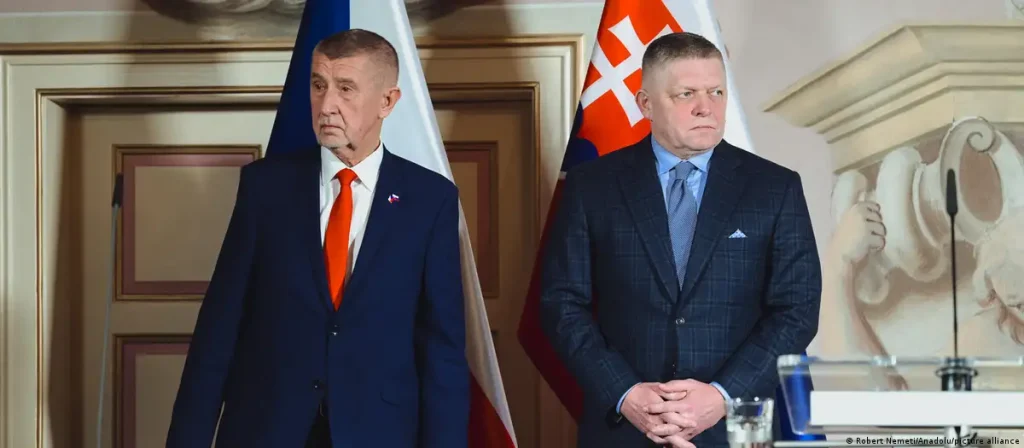
The Prime Ministers of Slovakia and the Czech Republic, Robert Fico and Andrej Babiš, have opposed a demand by German Chancellor Friedrich Merz that all European Union member states—without exception—contribute to the financing of Ukraine. “What the Chancellor is doing is a classic form of blackmail, and I have no intention of giving in to it,” Fico stated on Tuesday, November 10, while speaking to journalists in Bratislava.
He emphasized that Slovakia is a sovereign state with its own position regarding support for Ukraine. “We must respond to such blackmail,” he added, noting that his country possesses “the exact same veto power as the German Chancellor.”
Babiš, who was visiting Bratislava, also criticized Merz’s demand. “I don’t know why he would say such a thing,” he remarked. According to Bloomberg, Hungarian Prime Minister Péter Magyar also opposed Merz’s insistence on linking the agreement on funding for Ukraine to the adoption of the EU’s next long-term budget.
Dispute over aid to Kyiv and the EU budget
The criticism stems from a letter sent by Merz to European Council President António Costa—a document previously reported on by international media. In it, the German Chancellor urged that the issue of continued funding for Ukraine be added to the agenda of an informal EU summit in Dublin. He further asserted that the participation of all EU member states in meeting Kyiv’s financial needs is a prerequisite for advancing negotiations on the European Union’s budget for the 2028–2034 period.
According to European Commission estimates, Ukraine will require an additional 70 billion euros in 2027. It is expected that EU member states will be responsible for providing approximately 45 billion euros of that total. Fico stated that Slovakia “will not support further gratuitous payments to Ukraine.” Previously, Bratislava and Prague secured an exemption from obligations to provide guarantees for a €90 billion EU loan to Kyiv. According to Reuters, Slovakia, the Czech Republic, and Hungary have signaled that they do not intend to participate in any potential new loan for Ukraine either.